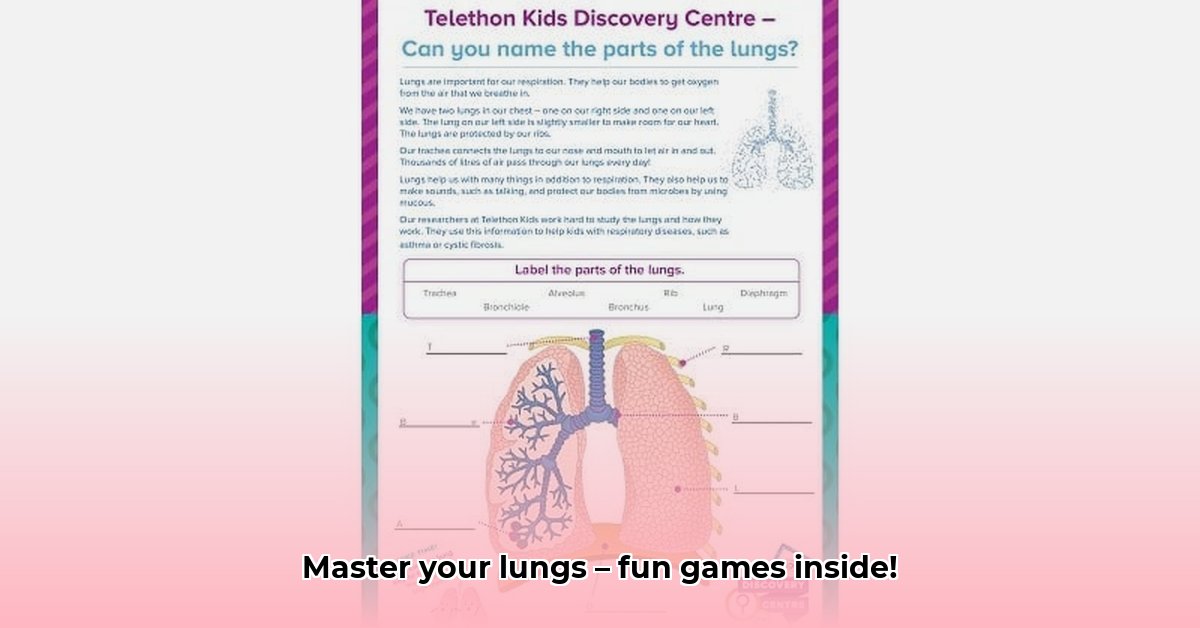
Learning about the respiratory system doesn't have to be stuffy! This guide shows you how to use engaging games to make learning about lungs and breathing fun for kids of all ages. Whether you're a parent or a teacher, get ready to transform learning into an adventure! For a fun interactive activity, try this interactive lung diagram.
Choosing the Right Respiratory System Game: A Perfect Fit for Every Learner
Picking the perfect game is key! Consider your child's age and learning style – visual, auditory, or kinesthetic – to maximize engagement. Did you know that matching the game to their learning style significantly improves comprehension?
Age-Appropriate Games: The Right Game for Every Stage
The right game depends on your child's age and developmental stage.
| Age Group | Game Ideas | Educational Focus |
|---|---|---|
| Preschool (3-5) | Interactive body part matching, simple breathing songs | Identifying major lung components, basic breathing |
| Elementary (6-11) | Puzzles, interactive quizzes, virtual lung 3D tours | How breathing works, gas exchange, healthy habits |
| Middle School (12-14) | Simulations, advanced quizzes, research projects | Deeper dive into breathing mechanics, lung diseases |
Learning Styles: Catering to How Kids Learn Best
Different kids learn in different ways!
Visual Learners: Thrive with colorful charts, 3D models, and interactive diagrams of the respiratory system. Consider games with vibrant animations.
Auditory Learners: Engage them with songs, podcasts, and games with engaging narration. Think interactive quizzes with sound effects.
Kinesthetic Learners: These hands-on learners will enjoy building models, acting out breathing processes, or playing games involving physical movement.
Making Learning Fun: Integrating Games into Daily Life
Respiratory system games easily integrate into daily life, both at home and in the classroom.
Classroom Adventures (For Teachers)
Games are fantastic tools for teachers! Utilize them as:
- Icebreakers: Start a lesson with an engaging game to capture students' attention.
- Review Tools: Reinforce concepts learned during a lesson with a quick, fun game.
- Assessments: Games can be adapted to create fun, engaging assessments to gauge student understanding.
Home-Based Learning Fun (For Parents)
Turn learning into quality family time! Make it playful and relaxed – the goal is engagement, not pressure.
- Family Game Night: Dedicate a night to playing respiratory system games.
- Educational Rewards: Use games as positive reinforcement for completing homework or chores.
- Weekend Adventures: Make learning a fun weekend activity.
Evaluating Game Success: Is It Working?
A successful game should be engaging and effective.
Key Features: Look for 3D models, simulations, interactive elements, and clear explanations. Does the game accurately depict the respiratory system?
Assessing Learning: Observe your child's engagement and ask questions. Does the game spark their curiosity and improve their knowledge retention? Are they asking insightful questions about the respiratory system after playing the game?
Dr. Anya Sharma, a leading educational psychologist at Stanford University, emphasizes, "Effective educational games should not only be fun but also align with established learning principles. Games that actively involve children in the learning process, challenge them appropriately, and provide opportunities for feedback are most likely to result in meaningful learning."
Beyond the Games: Expanding Knowledge
Don't stop with the games! Explore other ways to expand your child's understanding:
- Create Your Own Games: Get creative and make your own games using household items.
- Explore Related Topics: Discuss healthy habits like exercise and the importance of avoiding smoking.
- Further Research: Encourage children to research specific lung conditions or conduct simple experiments.
Remember, the goal is to spark curiosity. The more fun children have, the more they learn and remember. Let the games – and the learning – begin!